The toga is the most recognizable symbol of ancient Rome. It wasn't Roman. Neither was the triumphal procession, the fasces, the purple robes of power, or — by the Romans' own account — the gladiatorial games. All of it came from the Etruscans, the civilization that ruled central Italy before Rome was anything more than a village. The Etruscans were a confederation of wealthy, independent city-states — master metalworkers, engineers, and traders who controlled the Tyrrhenian Sea. The toga descended from their tebenna, visible in Etruscan tomb paintings centuries before Rome. The fasces — a bundle of rods around an axe symbolizing power over life and death — was an Etruscan emblem of kingship. It survives today in government iconography worldwide and gave the word "fascism" its name. The triumph, the curule chair, and the regalia of Roman authority all trace back to Etruria. Rome absorbed the Etruscans piece by piece — adopting their elite, their gods, and their engineering, including the drainage systems beneath Rome itself. Then it let their language die. By the first century AD, almost no one could read Etruscan. They became the ghost in the Roman machine — the people who built Rome's identity, then disappeared beneath it.
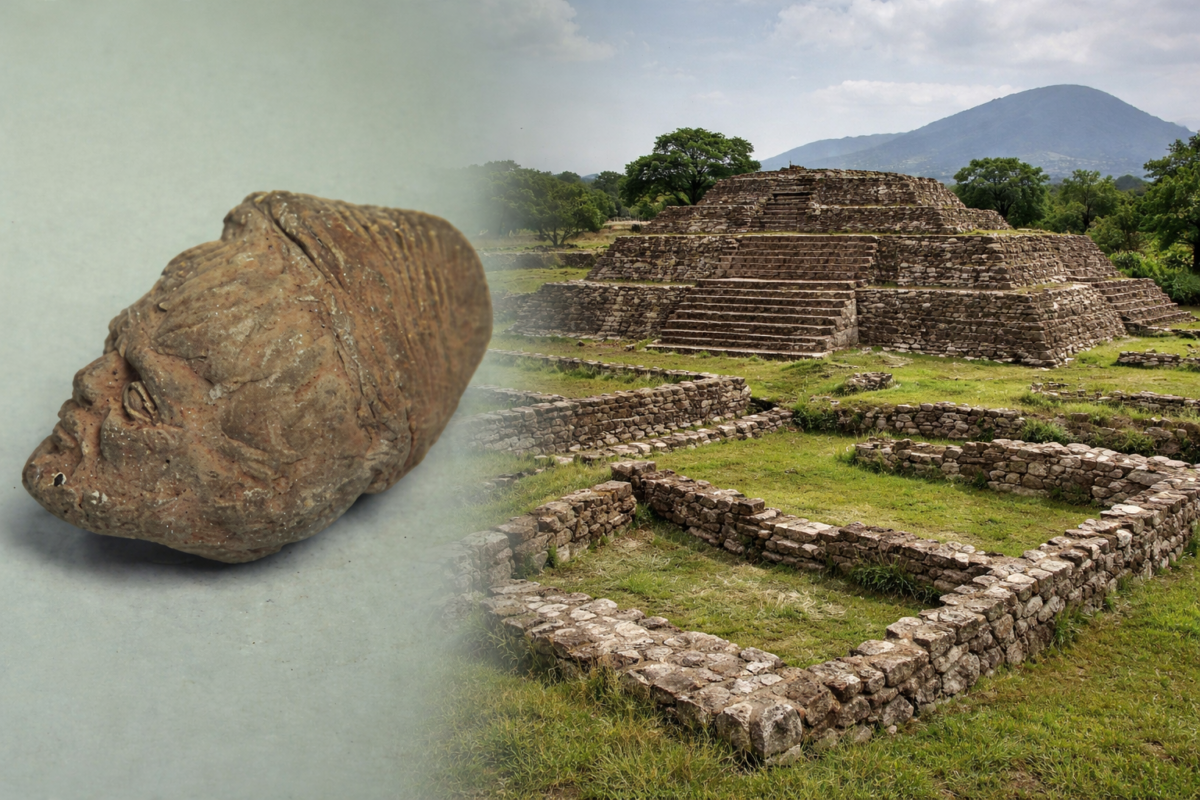
Rome ruled from Scotland to India, but largely ignored the Atlantic Ocean—the Romans called it Oceanus, the great outer sea. Medieval writers called it Mare Tenebrosum, the Sea of Darkness. Unpredictable winds, violent currents, no known destination. Their empire faced east. But in 1933, archaeologist José García Payón discovered something impossible: a small Roman terracotta head inside a sealed tomb near Toluca, Mexico. The tomb dated to before European contact. The floors above it were intact—nobody planted it after burial. Modern dating placed the artifact between 184 BC and 616 AD. The discovery was buried in academic journals and forgotten. In March 2026, the story resurfaced and went viral. How did a Roman artifact reach Mexico 1,300 years before Columbus? Romans did reach the Canary Islands (the "Fortunate Islands" mentioned by Pliny and Strabo). The North Atlantic Drift—the same current system that carries Gulf Stream water toward Europe—could carry a disabled Roman merchant vessel from the Canaries to the Caribbean in 40 to 60 days. No crew needed. Just wind and current. If even one Roman ship was blown off course in 800 years of maritime activity, the Tecaxic-Calixtlahuaca Head stops being impossible. It becomes inevitable. The artifact is housed at the Museo Nacional de Antropología in Mexico City.
A 2,000-Year-Old Roman Head in a Sealed Mexican Tomb Raises Questions History Can’t Answer
March 18, 2026
In the heart of central Mexico, beneath layers of earth untouched for centuries, archaeologists uncovered a discovery that still unsettles historians today. Known as the Tecaxic-Calixtlahuaca Head, this small terracotta artifact—found in a pre-Hispanic burial—has sparked one of the most intriguing debates in archaeology: Did ancient civilizations from Europe reach the Americas long before Columbus?
A Discovery That Defied Expectations
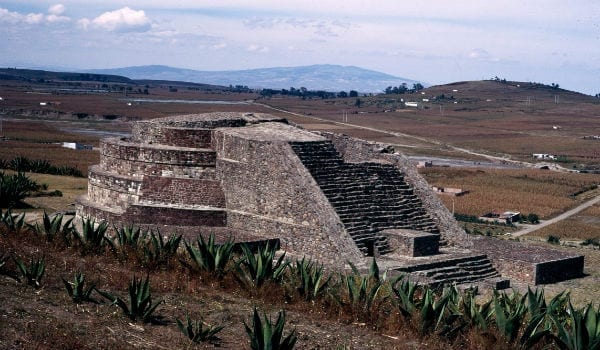
The story begins in 1933, when Mexican archaeologist José García Payón led excavations at the ancient site of Tecaxic-Calixtlahuaca, located roughly 65 kilometers from modern-day Mexico City.
Within a carefully sealed burial beneath three intact floor layers of a pyramidal structure, Payón’s team uncovered a rich funerary offering. The grave contained pottery fragments, gold ornaments, bone artifacts, and pieces of rock crystal—typical materials of pre-Columbian Mesoamerica.
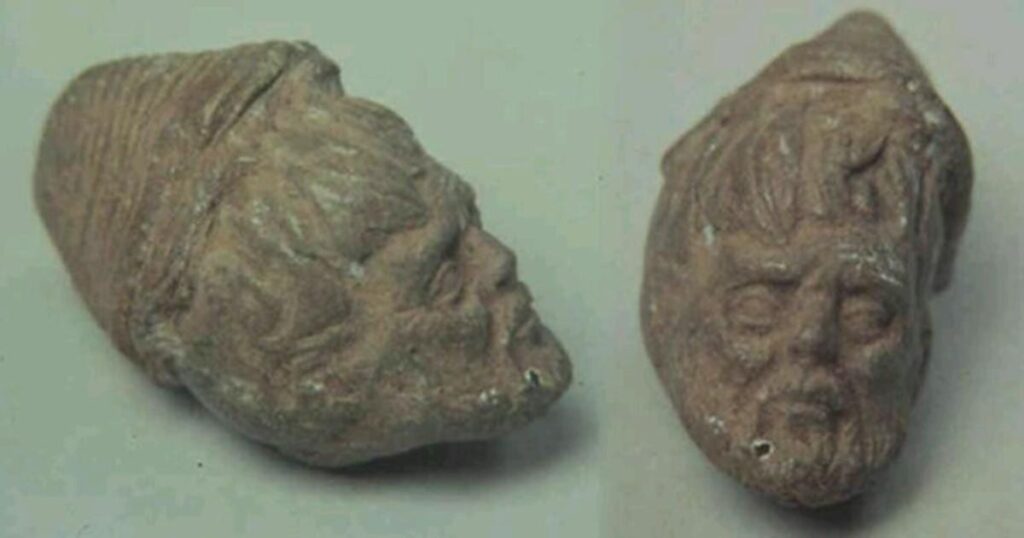
But among these objects was something entirely unexpected: a small terracotta head of a bearded man, with distinctly European features.
At first glance, the artifact appeared out of place. Its facial structure, beard style, and artistic execution did not resemble known indigenous Mesoamerican traditions. Instead, it looked strikingly familiar to something from the ancient Mediterranean world.
A Roman Face in the New World?
Decades later, the mystery deepened.
In 1961, Austrian anthropologist Robert Heine-Geldern examined the artifact and suggested it could date back as far as 200 BCE. Later, in the 1990s, German archaeologist Bernard Andreae—former director of the German Archaeological Institute in Rome—made a bold declaration.
According to Andreae, the head was “without any doubt Roman.”
His stylistic analysis pointed to the Severan period (193–235 CE), noting that the hairstyle and beard matched the fashion of Roman emperors from that era. If true, this would place the artifact’s origin in the Roman Empire—over a millennium before the burial in which it was found.
Scientific testing added another layer of intrigue. Thermoluminescence dating conducted in Germany suggested the object was indeed ancient, with a possible age range between the 9th century BCE and the 13th century CE. Crucially, this supported the idea that the artifact existed before Spanish contact with the Americas.
The artifact was discovered at the Tecaxic-Calixtlahuaca site alongside ceramic fragments, gold objects, bone, and rock crystal, sealed beneath three intact layers within a pyramidal structure.
A Timeline That Doesn’t Add Up
The burial itself was dated between 1476 and 1510 CE—just years before Hernán Cortés arrived in Mexico in 1519.
This creates a perplexing timeline. If the head is genuinely Roman and predates the burial, how did it end up in a sealed pre-Hispanic grave?
The find challenges the long-standing narrative tied to Christopher Columbus, whose 1492 voyage is traditionally seen as the first contact between Europe and the Americas. While Norse expeditions to North America are now widely accepted, evidence of Mediterranean civilizations reaching Mesoamerica remains controversial.
Theories Behind the Enigma
Over the decades, researchers have proposed several explanations—each as fascinating as it is contentious.
An Archaeological Hoax
One of the simplest explanations is also the most controversial: the artifact may have been planted.
Some researchers have suggested that a member of the excavation team placed the Roman head in the burial as a prank. According to later accounts, Payón was not always present during the dig and did not maintain exhaustive field notes—leaving room for doubt.
However, this theory relies heavily on hearsay. No direct evidence has ever confirmed deliberate tampering, and key witnesses are no longer alive to clarify the claim.
Early European Contact
Another possibility is that the head arrived in the Americas during the earliest phases of European exploration—perhaps even before the Spanish conquest of Mexico.
While the burial predates sustained contact, it overlaps with the earliest decades of transatlantic exploration. Could a stray European object have traveled inland and been incorporated into indigenous burial practices?
Some scholars consider this plausible, though unlikely.
A Drifting Shipwreck from the Old World
Perhaps the most intriguing hypothesis involves ancient transoceanic drift.
Researchers like Romeo Hristov have suggested that a Roman, Phoenician, or Berber ship could have been carried across the Atlantic by currents. If wreckage reached the shores of the Americas, objects like the terracotta head might have been collected and eventually traded inland.
Importantly, this scenario does not require sustained contact or exploration—only a single accidental crossing.
Still, critics argue that such an event, while theoretically possible, lacks supporting archaeological evidence.
Trans-Pacific or Asian Routes
A less discussed but equally intriguing idea proposes that the artifact may have reached the Americas via Asia. Ancient trade networks and migration routes across Eurasia could, in theory, have transported objects over vast distances before eventually crossing into the New World.
However, this theory remains speculative and difficult to prove.
A small terracotta head depicting a bearded man with distinctly European features, identified by experts as a Roman-style artifact dating to the 2nd–3rd century CE.
A Mystery Still Unresolved
What makes the Tecaxic-Calixtlahuaca head so compelling is not just its unusual appearance, but the context in which it was found: a sealed, undisturbed burial.
Despite decades of study, no single explanation has achieved consensus. Each theory raises new questions, highlighting the complexity of interpreting archaeological evidence.
As archaeologist David Grove has pointed out, even if the head did arrive via a shipwreck, it would not necessarily prove intentional contact between civilizations.
And yet, the artifact remains an outlier—an object that does not fit neatly into established historical narratives.
Rewriting History—or Expanding It?
The Tecaxic-Calixtlahuaca head serves as a reminder that history is not always as settled as it seems. While extraordinary claims require extraordinary evidence, anomalies like this challenge researchers to remain open to new possibilities.
Was it a hoax? A lost relic of early exploration? Or evidence of a forgotten chapter in human history?
For now, the answer remains elusive.
Buried beneath layers of time, the Roman head continues to watch silently—its origins uncertain, its journey unknown, and its mystery very much alive.
These days Kunzite is a popular pink gemstone, but it wasn't always a household name. In fact, for a long time, it was just an obscure, unnamed variety of the mineral spodumene.
That changed in 1902 thanks to a man named George F. Kunz. He was the legendary chief gemmologist for Tiffany & Co., and he was essentially the Indiana Jones of the gem world. When this vivid pink crystal was discovered in California, it was named in his honour, and Tiffany & Co. began heavily marketing it to the elite.
But even Tiffany knew the limitations of the stone. They didn't market it as a rugged, daily-wear engagement gem. They set it in massive, opulent, highly protected cocktail rings and pendants specifically designed to be worn to high-society evening events, safe from the sun and hard impacts. It is a stunning piece of jewellery history, but it was never meant to survive modern daily life.
The Olmec left a huge legacy on the cultures of Mesoamerica. In this episode, we'll explore the origins and rise of the Olmec and their great monumental tradition at San Lorenzo.
Olmec Blue Jade and Olmec Green Jade both refer to jadeite jade sourced from the Motagua Valley in Guatemala, prized by the Olmec civilization (1500–400 BCE). Blue jade is significantly rarer and more translucent than green jade, and it held deeper spiritual meaning for the Olmecs
Jadeite: True blue jadeite is mainly found in Myanmar (Burma) and is incredibly rare and expensive. Most of the blue jadeite on the market today is sourced from Guatemala, which spans grayish-blue to deep "Olmec blue" and is prized for its rarity.
Nephrite: While nephrite is generally more abundant than jadeite, high-quality blue nephrite is also scarce
. It is primarily found in California (like Big Sur and Clear Creek) and Washington State, which is known for unique blue-green cat's-eye nephrite.
Color & Composition
Olmec Blue Jade: Known in the gemstone trade as "Olmec Blue". Its highly sought-after, striking blue-to-green-blue hue is caused by trace elements like titanium and iron. It is prized for its high translucency and fine-grained texture.
Olmec Green Jade: Ranges from vibrant, bright greens to dark, opaque forest greens. Green jade is more common and abundant in the region, typically coming in varying qualities from completely opaque (often used for tourist trinkets today) to translucent, high-quality stone.
Cultural & Symbolic Meaning
The Olmecs placed immense religious significance on both, but their uses and symbolism differed:
Blue Jade: Represented water, the Underworld, and serpentine renewal (like a snake shedding its skin). Because blue was the rarest color, blue jade items (such as the famous Olmec votive axes, ear spools, and figurines) were typically reserved for the highest-ranking elites and the most important rituals.
Green Jade: Associated with the young Maize God, new growth, life, and agricultural abundance. It was frequently used for everyday ornamental jewelry, ceremonial tools, and death masks, as it symbolized life and renewal in the afterlife.
Value & Rarity
Blue: Because the ancient sources and specific geological deposits were largely lost to history for centuries, Olmec Blue Jade is extremely rare and highly valued by modern collectors. Untreated natural pieces command premium prices.
Green: More abundant and widely available, the price of ancient or modern Olmec-style green jade varies drastically based on the stone's translucency and clarity.
What is the history of blue jade?
Blue jade—a rare, mesmerizing variation of either jadeite or nephrite—has a captivating history deeply rooted in ancient Mesoamerica and various indigenous cultures.
The Mesoamerican Connection: "Olmec Blue"
The Olmecs (1500–400 BCE): The earliest and most famous historical use of blue jade traces back to the ancient Olmec civilization in modern-day Guatemala. They specifically prized a striking blue to blue-green jadeite, famously known in the gem trade as "Olmec Blue".
GIA +1
Symbolism & Use: The Olmecs (and later the Maya and Aztecs) valued jadeite more highly than gold. They carved it into ritual axes, ceremonial masks, and talismans, associating its sky-blue color with divinity and the spiritual realm.
The Lost Mines:
Following the Spanish conquest of Mesoamerica in the 16th century, the Spaniards focused on extracting gold and emeralds. Mayan guards kept the location of the jade mines heavily protected, and the mineral was completely lost to history for over 500 years until it was rediscovered in the 1970s.
Indigenous Use in New Zealand
Māori Pounamu: The Māori people of New Zealand have treasured jade for centuries. They refer to jade as pounamu (often called greenstone in English) and use it to carve heirloom weapons, tools, and pendants known as hei-tiki.
Spiritual Power: While much of pounamu is green, darker blue-green and "midnight blue" variations of nephrite jade were highly sacred. The Māori believe the stone holds the spirit of ancestors and carries protective powers.
Modern Discoveries & Sources
Guatemala: Since the rediscovery of the Guatemalan mines, it remains the most commercially significant source for high-quality blue jadeite. It is noted for its unique gray-blue hues and distinct "snowflake" white inclusions.
Other Localities: True blue jade is incredibly rare, though smaller deposits of nephrite jade with striking blue or blue-green tones have been found in remote parts of Siberia (Russia), Wyoming, and California (e.g., Big Sur and Clear Creek).
Today, blue jade is revered both in fine jewelry markets for its modern, neutral hue and in crystal healing, where it is often utilized as a "dream stone" designed to promote calm, patience, and divine harmony.
Natural blue jade is considered a very rare and highly collectible gemstone. While green and white are common, the specific geological conditions and trace elements (like titanium and iron) needed to create natural blue hues are uncommon.
The rarity and availability of blue jade depend significantly on whether it is Jadeite or Nephrite:
1. Blue Jadeite (Highly Desirable & Rare)
Olmec / Guatemalan Blue:The most common commercially available blue jadeite originates in Guatemala. It spans from a pale grey-blue to deep teal (often called "Olmec Blue" or "Blue Water"). High-quality, translucent stones can be quite valuable.
Burmese (Myanmar) Blue:
True blue jadeite from Myanmar is exceptionally rare and seldom seen on the market. These are typically highly sought after by collectors and command premium prices.
2. Blue Nephrite (Very Rare)
Nephrite is generally more common than jadeite, butbluenephrite is exceedingly scarce.
Sources are extremely limited. It is primarily found in small, localized deposits in California (Big Sur/Clear Creek) and Washington state, which is known for unique blue nephrite with a cat's eye effect.
Is Olmecs jade rare?
Olmec Ancient jade figurines of similar size have been appraised at $50,000-$100,000. The piece is priced for a fraction of acquisition costs due to the passing of a prominent collector. This is a rare opportunity to acquire an extremely rare ancient fine art piece at a deal. Best offers will be strongly considered.
Why did the Olmecs value jade?
The Olmec were fascinated with the unique blue jade of Guatemala and it played an important role in their rituals involving water sources. The Olmec used blue jade because it represented water, an Olmec iconography representing the Underworld.
Where do you find blue jade?
Blue Jade Explained
Blue nephrite jade is mainly sourced from California and Russia, but is not commercially significant on the world market. Blue jadeite jade from Myanmar does exist but is rarely seen in the American market.
Most blue jadeite available in the U.S. today comes from Guatemala.
How much is a blue jade?
The price of blue jade varies drastically, ranging from $3 for a bead to $680 for a rare, natural high-translucency (A-grade) collector piece. Prices largely depend on the mineral type (jadeite vs. nephrite), natural origin vs. color-treatment, and gem-quality.
1. Natural Blue Jadeite (Highly Collectible)
Cabochons & Fine Gemstones: High-quality natural blue jadeite is very rare. Cut stones and flawless cabochons range from $500 to $1,000+ per carat depending on translucency and depth of color.
Carvings & Bangles: Solid hand-carved blue jadeite stones or dragon oblongs typically cost between $50 and $300 based on weight.
Because fine blue jadeite requires rare elemental impurities (like iron and titanium) to form, stones with rich color and high translucency command a massive premium.
isn't just beautiful — it's spiritual. In Vietnamese ...",null,null,null,null,null,null,null,null,"www.instagram.com",null,null,null,null,"www.instagram.com"]}]">
Blue jade symbolizes peace, serenity, and spiritual reflection. Often called the "Stone of Stillness", it is prized for calming the mind, clearing away emotional turbulence, and helping to ease stress.
Blue jade is a soothing crystal known forpromoting peace, mental clarity, and emotional balance. It helps ease anxiety, fosters patience, and is highly valued in spiritual practices for enhancing intuition, dream recall, and gentle communication.
For the ancient Olmec civilization (c. 1200–400 BCE), green jade (specificallyjadeite) was their most sacred and valuable material. It symbolized life-giving water, lush vegetation (particularly maize), fertility, and cosmological power. Because it was extremely difficult to carve, possessing it signaled elite nobility and divine connection.
Core Cultural Meanings
Breath and Rebirth: The verdant and blue-green hues were deeply linked to breath, the soul, and agricultural abundance. Jade beads were frequently placed in the mouths of the deceased to ensure safe passage to the afterlife and spiritual rebirth.
Rulership and Status: Prized above gold, jade was a marker of elite social identity. Rulers and shamans wore intricate jade ornaments to signify their divine authority and ability to communicate with the supernatural.
Ritual Purity: The Olmec utilized jade for ceremonial votive axes and ritual perforators used in self-sacrifice, viewing the stone as a direct channel to the gods.
Metaphysical & Crystal Healing Beliefs
In modern spiritual and holistic practices, Olmec green jade is highly sought after as a stone of harmony, abundance, and protection.
Abundance and Growth: It is believed to attract good luck, financial prosperity, and new opportunities.
Heart Chakra Healing: Associated with the heart center, it is said to promote emotional balance, release negative thoughts, and soothe the mind.
Physical Vitality: Historically carrying the energetic vibration of water and nature, it is used to cleanse the body and support physical healing.