
Remarkable 2,000-Year-Old Roman Shipwreck Discovered
Published
Sep 30, 2025 at 11:32 AM EDT
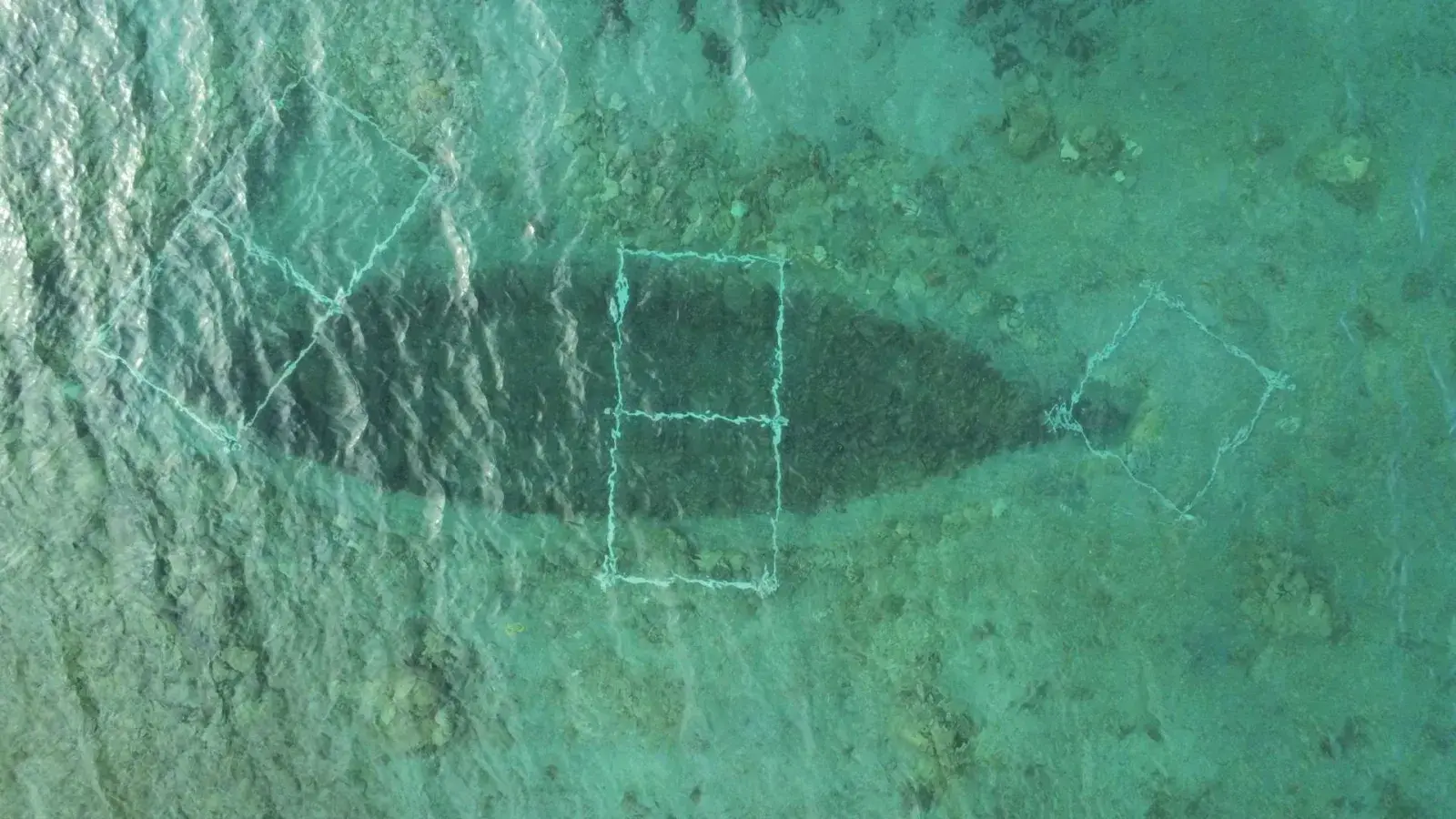
A team of researchers have been uncovering a remarkably well-preserved shipwreck, which is thought to be around 2,000 years old, in Barbir Bay near Sukošan in Croatia.
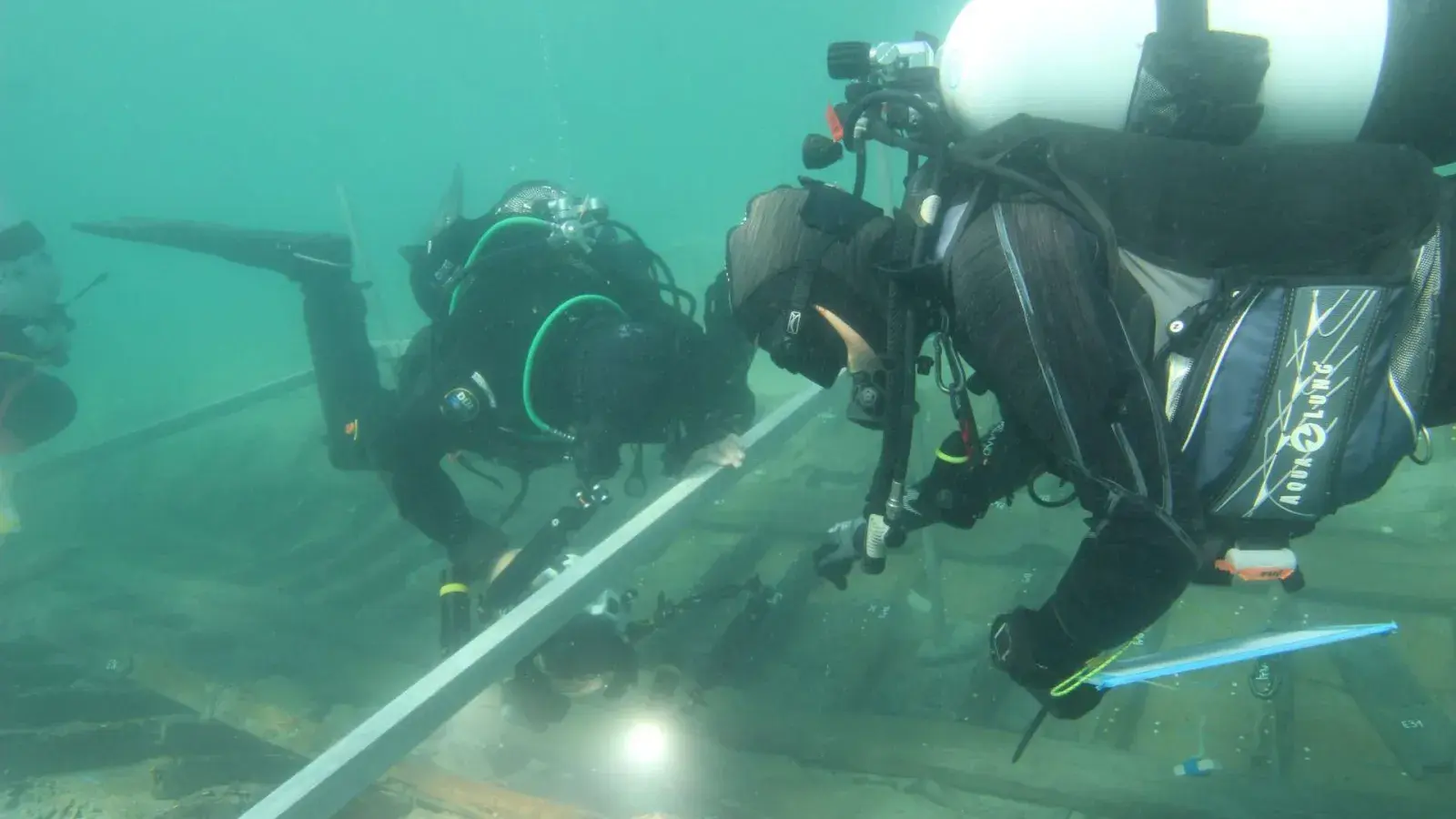
Archaeologists from the International Center for Underwater Archaeology in Zadar have been exploring the wreckage with a multi-national team of researchers from the Nicolaus Copernicus University in Toruń, Poland, the Max Planck Institute in Germany, the University of Aix-Marseille in France, the French company Ipso Facto and Croatian underwater archaeology company NavArchos.
Newsweek has contacted the International Center for Underwater Archaeology via email for comment.
Why It Matters
Underwater archaeology plays a crucial role in developing and reshaping our understanding of human history, as by studying sites like shipwrecks researchers are able to piece together valuable insights about past cultures and trade routes.
An undated image of the shipwreck in Barbir Bay near Sukošan in Croatia, taken from above. | R. Scholz /International Center for Underwater ArchaeologyWhat To Know
The shipwreck was first discovered in 2021 when International Center for Underwater Archaeology researchers found a 2000-year-old plank of wood, the center's director Mladen Pešić said, according to the Croatian news outlet HRT.
The finding prompted a wider investigation of the area and after four years of investigations the team has now uncovered the entire ship.
The research team investigate the wreckage of the ship in this undated image taken in Barbir Bay near Sukošan in Croatia. | A. Divic/ International Center for Underwater ArchaeologyThe vessel is thought to date from the 1st or 2nd century C.E.—the Roman era—and is around 12.5 meters long. It was reportedly found with hundreds of olive pits, which suggests it could have been a trading vessel in the Adriatic Sea, Heritage Daily reported.
Per the outlet, excavations of the port area resulted in the discovery of the remains of grape, peach and walnut shells, which could mean it was a hub of agricultural trade.
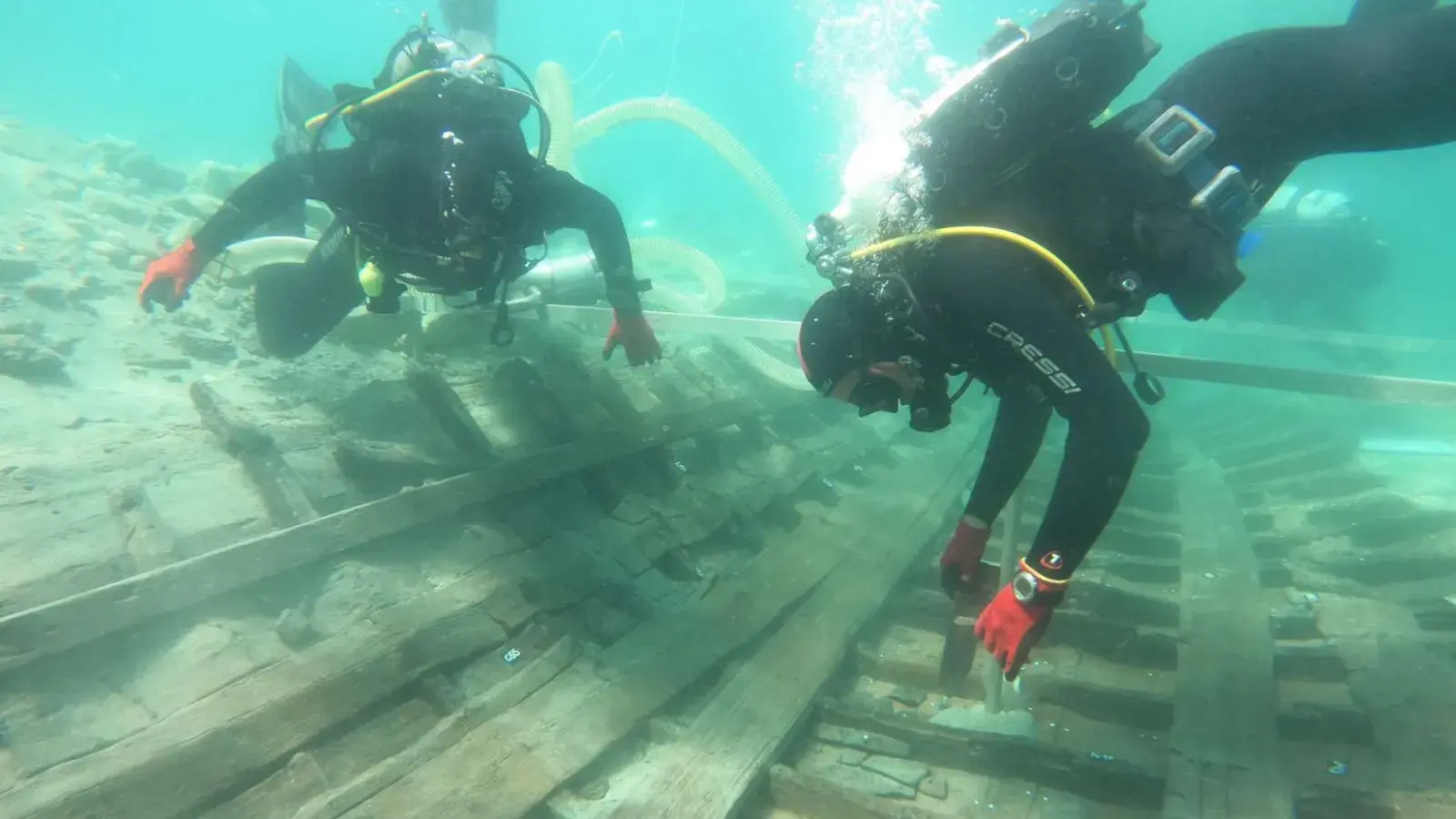
The research team identify different parts of the shipwreck in Sukošan in Barbir Bay. | R. Scholz /International Center for Underwater ArchaeologyIt is rare for a shipwreck to be found with many elements of the upper structure of the ship still in tact, the International Center for Underwater Archaeology said in a press release, emphasizing how unique of a find the wreckage is.
A number of ancient shipwrecks have been discovered in the Mediterranean Sea, with 2,000-year-old Roman terracotta jars found in the remains of a ship found off the coast of Italy in 2023, a Greek merchant ship discovered in 2018 off the Bulgarian coast and dozens more.
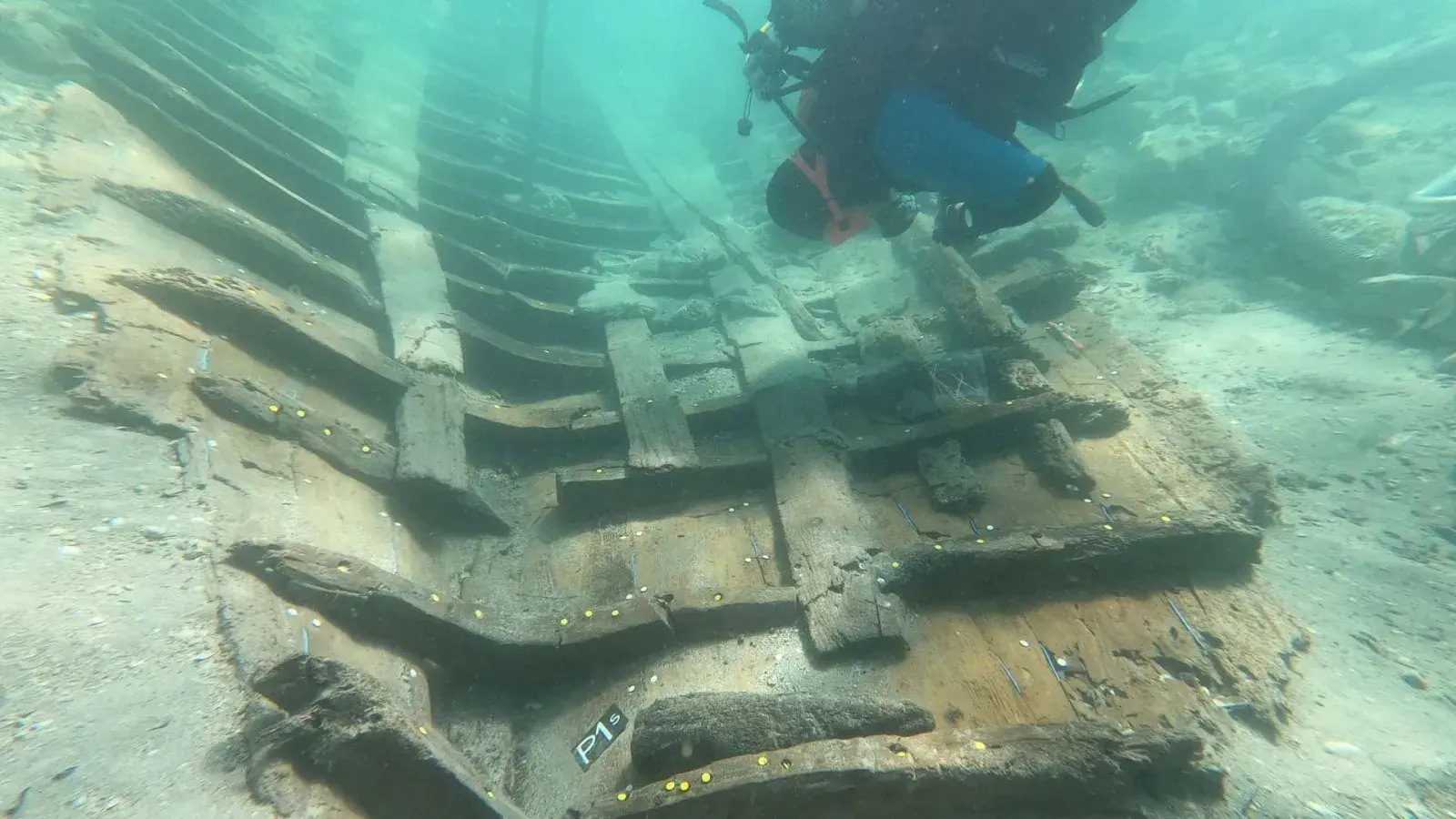
An image of part of the ship found in the underwater wreckage. | M. Kaleb/International Center for Underwater ArchaeologyWhat People Are Saying
Mladen Pešić, director of the International Center for Underwater Archaeology in Zadar, said, according to Croatian news outlet HRT: "We came across one find of wood with an iron nail, which reminded us that there could be a more interesting find in that place. The following year, we started exploring the wider area and discovered that it was a Roman shipwreck. We have been exploring for four and a half years, and this is the last year, so we have discovered the entire ship."
Anton Divić, owner of the Croatian underwater archaeology company NavArchos, said, according to HRT: “This is a very precise and stable type of ship construction, capable of carrying heavy loads and sailing medium to long distances. Such vessels were essential for life along our coast and islands 2,000 years ago."
What Happens Next
The researchers are now looking into creating a model of the ship, using numerous wooden elements found and modern technology, to understand what the ship would have looked like. This could also help researchers learn more about ship navigational capabilities during the Roman period, the International Center for Underwater Archaeology said.

Article
Remarkable 2,000-Year-Old Roman Shipwreck Discovered - Newsweek