
Before London. Before New York. Manila was the center of world trade.From 1565 to 1815 — 250 YEARS — the Manila Galleons sailed from Manila to Acapulco carrying Chinese silk, Philippine gold, spices, and Mexican silver. It was the longest, richest trade route on Earth.Manila wasn't a sleepy colony. It was where Asia and the Americas met. The world came to US.Why do textbooks call it just “Spanish trade”? Because they erased that Filipinos built it, sailed it, and made Manila rich


The Manila galleon trade route was a Spanish trans-Pacific shipping network connecting Manila in the Philippines with Acapulco in New Spain (Mexico) from 1565 to 1815. It linked Asian goods—especially Chinese silk and porcelain—with silver mined in the Americas, driving early global trade. [1, 2, 3]Navigation & Voyages
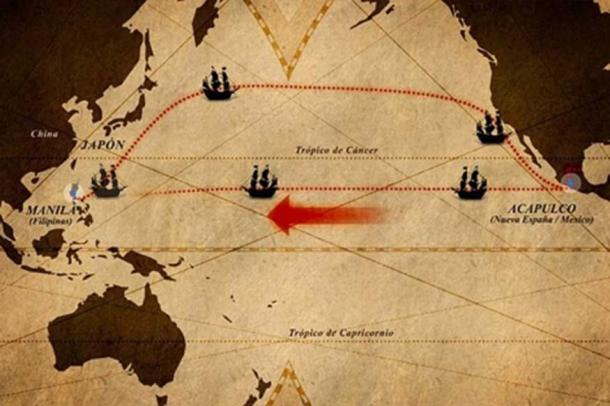
- Westward (Acapulco to Manila): Ships typically departed in February or March using northeasterly trade winds at lower latitudes (around 10°–15° N). Voyages usually took about 2 to 3 months, often stopping at Guam after 1668. [1, 2]
- Eastward (tornaviaje, Manila to Acapulco): Opened in 1565 after navigator Andrés de Urdaneta charted a northern return path. Vessels sailed north past Japan into higher-latitude westerly winds (around 30°–45° N), caught currents toward the California coast, and headed south to Acapulco. These grueling crossings often took 5 to 6 months and brought storms, scurvy, and disease. [1, 2, 3, 4]
- Frequency & Scale: Galleons typically made one round trip per year (with a 1593 royal decree capping sailings at two ships annually from each port to protect Seville trade monopolies). Filipino shipbuilders and sailors were central to constructing, provisioning, and crewing the vessels. [1, 2, 3]
Goods & Economic Impact
- Eastbound Cargo: Chinese silk, porcelain, spices, ivory, cotton textiles, and luxury crafts gathered in Manila from across Asia. [1, 2, 3]
- Westbound Cargo: Silver bullion and minted Spanish silver coins (such as the Spanish silver peso) from Mexico and Peru, alongside passengers, missionaries, and administrative dispatches. [1, 2, 3, 4]
- Global Reach: From Acapulco, goods and silver moved overland to ports like Veracruz and across the Atlantic to Spain and Europe, while silver flowed into China's economy. This trans-Pacific link tied Europe, the Americas, and Asia together through silver currency and maritime commerce.
Trading Treasures and Curiosity: The Fascinating History of Manila Galleons
Every remarkable story starts with curiosity. That is the primary reason why people travel and want to discover new lands. It applies to every period in history, from antiquity to our times. The story of Manila Galleons and the first massive trade route is a tale about gold and sailors who sold their lives to rulers, seeking adventure and extraordinary lives.
The trading ships traveled between Manila and Acapulco for about 250 years. During the round-trips that took place twice per year (in the case of most of the ships) the galleons brought an incredible amount of goods from Asia to New Spain. Most of the ships carried goods from China, and thus the Manila Galleons were also called The China Ships. Their story is difficult to describe to those who focus on the controversies related to Europeans conquering new lands. However, it is a beautiful story for anyone who wants to hear a tale scented with the fragrance of exotic spices.
Map showing the routes between Manila and Acapulco. (abagond.wordpress)
A Beneficial Trade Discovery
The one who opened the world of Asia to Spanish expeditions was Ferdinand Magellan, who traveled across the Pacific in 1521. After his journey, Spaniards believed they needed to continue the exploration of this region. It was a time when they knew about the existence of the Americas, so they wanted to create a trade route with New Spain (now Mexico).
For several years, the Spanish knew how to travel to the Philippines, but they didn't know the way from Manila to New Spain. The first galleon traveled to Manilla in 1565, when Andres de Urdaneta discovered how to return from the Philippines to New Spain. He traveled with Alonso de Arellano, and they opened a new chapter of Spanish trade history. The cargoes not only consisted of valuable goods, but also differences in culture. The sale of products among the colonies, two worlds that belonged to the Spanish, created a market that had never existed before. People who lived on three different continents were now able to enjoy products from Asia, America, and Europe.
Explorer Andrés de Urdaneta. (GFDL)
Moreover, the trade with the Chinese was very beneficial to Spain. During the reign of King Phillip II of Spain, the relationship between Spain and Ming China allowed them to buy new ships. With time, the Spaniards had to create shipyards in the Philippines, where they constructed 15 ships between 1609 and 1616. The difficult trade route was beyond many of the ships’ abilities. Thus, several galleons and galleys were lost because they were too dense to survive the difficult weather they encountered. Those ships were full of goods that could have been beneficial in trade.
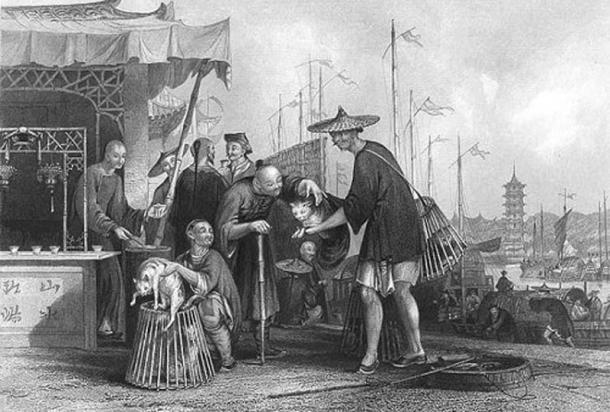
Philippian people trading goods. (abagond.wordpress)
From the Philippines to Mexico, the ships carried jade, toys, furniture, silk, woven rugs, porcelain, cinnamon, pepper, cloves, nutmeg, and many other spices. Apart from this, there were things like cotton, ivory, topaz, textiles, woodcarvings, diamonds, curry, ceramic, camphor, ebony, rubies, sapphires, jewelry, etc.
The Japanese market provided knives, samurai swords, bronze, copper, saltpeter (potassium nitrate), cabinetwork, cotton, coconut, gold, shell products, rope, hammocks, jewelry, etc. The galleons also carried European goods and some products from the Americas from Mexico to Manila.
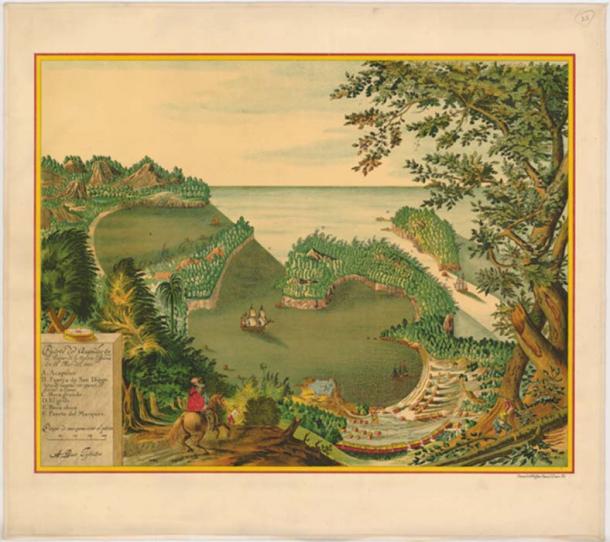
Acapulco in 1628, Mexican terminus of the Manila galleon. (Public Domain)
Some researchers suspect that these travels brought one more benefit - the trade route helped find the Hawaiian Islands. The route took ships near the southern side (although there is a small chance it could have been the Marshall Islands that were passed by instead.) If this is true, a sailor named Juan Gaetano saw Hawaii in 1555, many years before James Cook’s expedition in 1778.
Remnants of the Spanish Fleet
The wealth and the remarkable trade route didn't protect ships from the powers of nature. The galleons full of treasures very often had no chance against the terrifying waves of the Pacific Ocean. Although the ships were of a very high quality and created by specialists from famous shipyards that were qualified to build ships for the Spanish Armada, sometimes the elements were stronger than the creations made by the experienced builders.
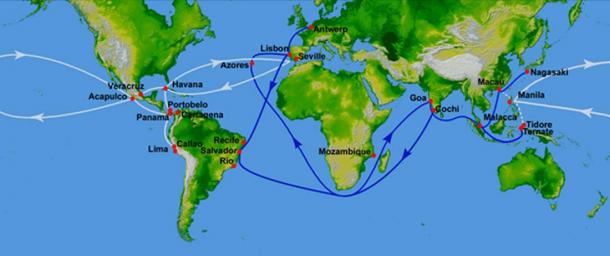
White represents the route of the Manila Galleons in the Pacific and the flota in the Atlantic. (Blue represents Portuguese routes.) (Public Domain)
One of the most spectacular and significant discoveries of a galleon that traveled between Manila and Acapulco was the famous ship Nuestra Señora de la Concepción, which sunk in 1638 on route to Acapulco. According to an article by Roberto Junco:
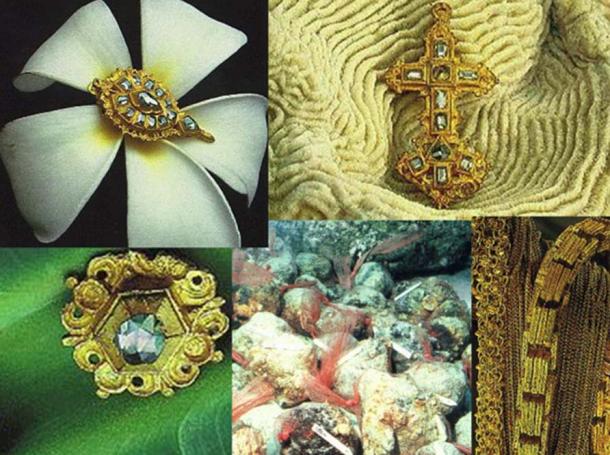
''Pacific Sea Resources undertook the salvage operation between 1988 and 1999 with the intention to sell the entire collection to a Japanese hotel chain with plans to create a touristic project on the island of Saipan in the Northern Mariana Islands (Delgado 1998:277). The wreck site was known since 1674, when a Spanish recovery expedition secured most of the 36 cannons on board (Mathers 1993:33). This type of salvage operation was very common throughout the Spanish empire and not just by the Crown, but also by commercial contracts (Serrano 1991). Thus, thanks to the historic document and the Chinese porcelain washed out in the beach, treasure hunters located the archaeological site (Galvan 1998:88). The ship sank while the crew brewed a mutiny in the midst of a great storm that destroyed the masts, and left the ship at the mercy of wind and currents (Mathers 1993:29). On September 1638, the Concepción broke up on a southern reef of the island of Saipan (Mathers 1990:45). The Chamorro Indians (given this name by Magallanes) attacked the castaways and only 28 survived of which only six finally arrived to the Philippines starved and thirsty to tell the story (Schurtz 1992:236). Several years later, priests visiting the islands found gold chains hanging from the trees and iron tools being used by the natives (Fish 2011:14). Among the many objects recovered by the operation, is a collection of gold objects such as rings, chains, and other objects, some Chinese coins of the Wan Li period (1573-1620), and a sixteenth-century Spanish silver coin. Among the highlights of the collection are the 156 glazed Southeast Asian ceramic containers used to transport supplies, with interesting markings in Spanish, Tagalog and Chinese, as well as fragments of porcelain and glass, and a number of objects related to the construction and operation of the ship.''
Treasures from Nuestra Señora de la Concepción ship. (ns.gov.gu)
The treasures discovered at the wreck site shed light on the remarkable story of the ships that traveled on this route. Apart from this galleon, the underwater archaeologists unearthed treasures of several other galleons, including San Augustin, Santa Margarita, and Nuestra Señora del Pilar.
The Old Route
Although the incredible story about the trade route ended in 1815, the legend of galleons filled with remarkable treasures is still remembered. Nonetheless, many details related to this story were lost over time.
In 2015, the Pacific adventures of Spanish Galleons were presented during a very successful and appreciated exhibition titled ''Pacifico España y La Aventura de la Mar del Sur'' in Museo do Mar in Vigo, Spain. After many centuries, the tale of the first massive sea trade route is still admired by many.
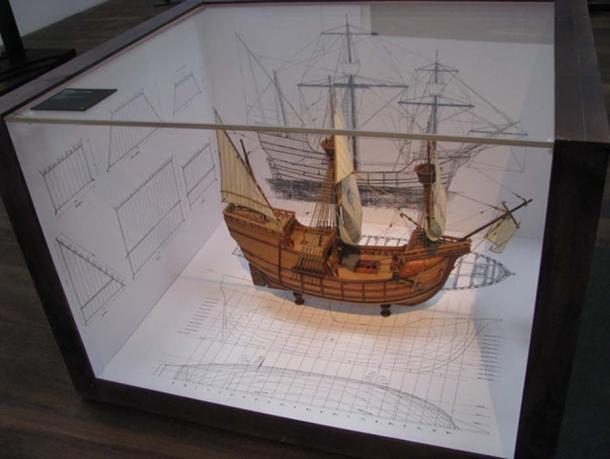
Detailed model of galleon of Manila by Museo do Mar, Vigo. Photo by author.
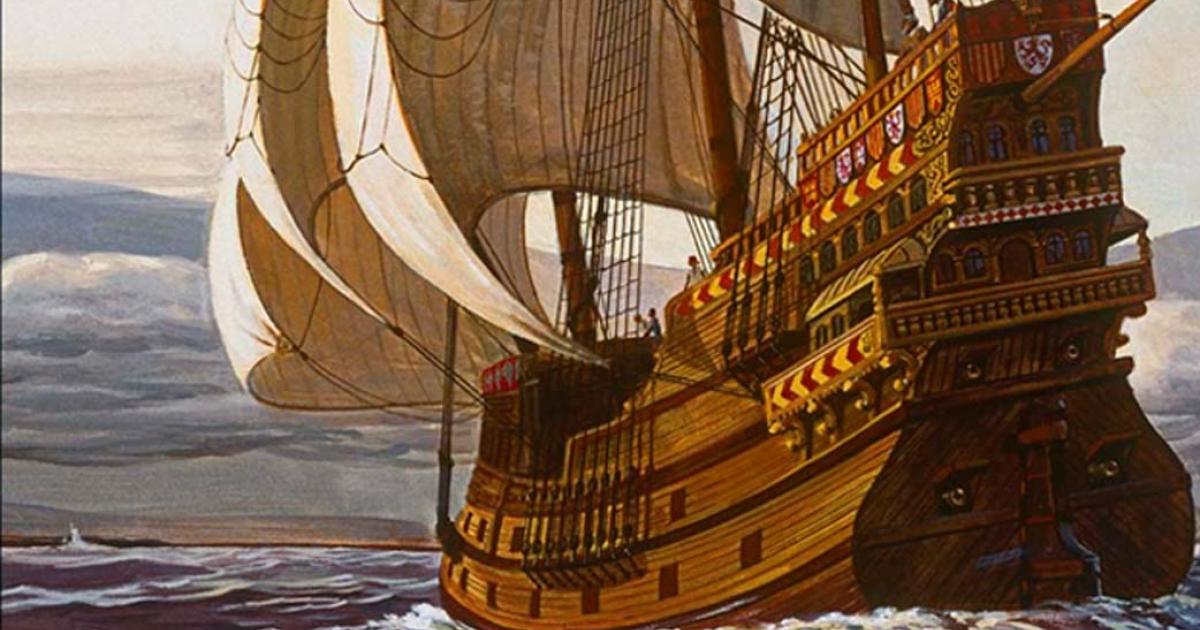
Top image: Illustration of a galleon. (abagond.wordpress.)
From Manila and other parts of the Philippines the Galleons would asemble at the island of Capul off samar. The Island even today is called Capul which is a shortened version of A-CAPUL-CO. Here they would assemble and reload goods, melt golden artifacts into ingots. They would then leave for the northern Samar port of San Josè where they would load spare part wood, water and bread, then sailing due east to Acapulco Mexico.


Article
Trading Treasures and Curiosity: The Fascinating History of Manila Galleons | Ancient Origins