
Templar Symbols: Santa Maria d' Arabona is a Cistercianabbey in Manoppello - Abruzzo, in central Italy constructed in 1208.
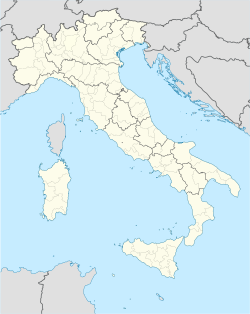 Location within Italy
Monastery information Order Cistercian Established 1209 Disestablished 1587 Mother house Tre Fontane Abbey Diocese Chieti-Vasto Site Location Manoppello,Italy


Zoom in and you'll see Templar Symbols


Manoppello, Italy, is an epicenter of medieval religious history, best known for housing the Holy Face of Manoppello—a revered cloth bearing the living image of Christ. The region also features the stunning medieval Abbey of Santa Maria d'Arabona which is rich in enigmatic monastic and Templar-style symbolism.
The Abbey of Santa Maria d'ArabonaFounded in 1197 by the Cistercian order, this abbey is famous for its soaring architecture and historical connections to medieval chivalric and religious orders. [1]
- The Site: Designated a national monument, its Romanesque features include pointed arches and a magnificent east-facing rose window.
- Templar Connections: While the abbey was originally Cistercian, the Knights Templar frequently maintained close ties with Cistercian monasteries. Historians and local lore link the site to both the Knights Templar and the Order of the Holy Sepulchre.
- Monastic Symbols: Throughout the abbey and its surrounding stone grounds, you can find mysterious, often ambiguous medieval graffiti, heraldic designs, and burial markers belonging to monks who lived at the site. [1, 2, 3]
Knights Templar Symbols
If you are exploring Abruzzo's Templar heritage, the symbols carved into the stone facades of these medieval churches usually include:
- The Patriarchal Cross (or Cross of Lorraine): A double-barred cross often used by Templar knights and the Order of the Holy Sepulchre.
- The Jerusalem Cross: A large central cross with four smaller crosses in the corners, symbolizing the five wounds of Christ and the crusades.
- The "Beauceant": While primarily a war flag, its black-and-white color scheme (symbolizing the sins of the world and purity) was frequently incorporated into monastic and Templar stonework.
- The Agnus Dei (Lamb of God): A very common Templar seal featuring a lamb carrying a banner, representing Christ's sacrifice and the order's vows of poverty. [1, 2]
The Holy Face of Manoppello
- The sanctuary houses a sheer, transparent, and shimmering veil known as the Volto Santo.
- Believed by many to be the Vera Icona (True Image) or Veil of Veronica, the cloth displays a peaceful, living face of Jesus with open eyes.
- Scientific researchers and art historians have drawn direct, striking overlays between the facial characteristics on the Manoppello Veil and the face encoded on the Shroud of Turin. [1, 2, 3, 4, 5]
Santa Maria Arabona is a stunning late-12th-century Cistercian abbey located in Manoppello, Italy. Nestled in the Abruzzo countryside, the majestic structure is renowned for its 13th-century stone tabernacle, towering Easter candle, and impressive medieval frescoes. [1, 2, 3, 4]History & Architecture
- Origins: Construction of the abbey began around 1208 under French and local direction, though it was never fully completed according to its grand initial design.
- Design: It features a Cistercian layout and highlights French Gothic influences. The building's interior is bright and essential, allowing light to illuminate its historical treasures.
- Masterpieces: Inside, you will find a beautifully decorated stone tabernacle, an intricate six-meter-high Easter candle twisting with reliefs of shrubs and animals, and frescoes attributed to 14th-century painter Antonio da Atri. [1, 2, 3, 4]
Planning Your Visit
- Location: The abbey is located in the hamlet of Santa Maria Arabona within the municipality of Manoppello (Province of Pescara).
- Surroundings: It rests at the foothills of the Maiella National Park, offering beautiful garden spaces and scenic views of the Pescara Valley.
- Nearby Attraction: While in Manoppello, visitors often also stop at the Basilica of the Holy Face (Volto Santo), which houses a revered image believed by many to be the Holy Face of Jesus. [1, 2, 3, 4, 5, 6]
The Abbey of Santa Maria Arabona (Abbazia di Santa Maria Arabona) is a 12th-century Cistercian monastery located in the town of Manoppello, within the Abruzzo region of Italy. It is considered the finest example of French Gothic architecture in the region.
Key Features and History
- Ancient Origins: Built on the site of a pagan temple dedicated to Bona Dea, the Roman goddess of fertility.
- Architecture: Construction began in 1197. It features a Latin cross plan and high, elegant Cistercian-style vaults, though the building remains technically incomplete.
- Artistic Masterpieces:
- Easter Candelabrum: A 6-meter stone candle holder decorated with intricate carvings of animals and shrubs.
- Tabernacle: A 13th-century stone masterpiece supported by two pillars.
- Frescoes: Features 1373 works by Antonio da Atri, including a Madonna with Child and a Saint Catherine of Alexandria.
- Gardens: The abbey is surrounded by well-kept gardens featuring a fountain and an ancient balcony. [1, 2, 3, 4, 5, 6]
Visitor Information
Pro Tip: While in Manoppello, most visitors also stop at the Sanctuary of the Holy Face (Volto Santo), which houses a famous veil believed to bear the image of Christ. [1]
Would you like to know about:
- Guided tours that combine the abbey with local wine tastings?
- Directions for getting there by train or car?
- Other medieval abbeys to visit in the Pescara Valley? [1]
Article Source
Abbazia di Santa Maria Arabona - Manoppello (PE)
Wikipedia
Santa Maria Arabona - Wikipedia