The toga is the most recognizable symbol of ancient Rome. It wasn't Roman. Neither was the triumphal procession, the fasces, the purple robes of power, or — by the Romans' own account — the gladiatorial games. All of it came from the Etruscans, the civilization that ruled central Italy before Rome was anything more than a village. The Etruscans were a confederation of wealthy, independent city-states — master metalworkers, engineers, and traders who controlled the Tyrrhenian Sea. The toga descended from their tebenna, visible in Etruscan tomb paintings centuries before Rome. The fasces — a bundle of rods around an axe symbolizing power over life and death — was an Etruscan emblem of kingship. It survives today in government iconography worldwide and gave the word "fascism" its name. The triumph, the curule chair, and the regalia of Roman authority all trace back to Etruria. Rome absorbed the Etruscans piece by piece — adopting their elite, their gods, and their engineering, including the drainage systems beneath Rome itself. Then it let their language die. By the first century AD, almost no one could read Etruscan. They became the ghost in the Roman machine — the people who built Rome's identity, then disappeared beneath it.
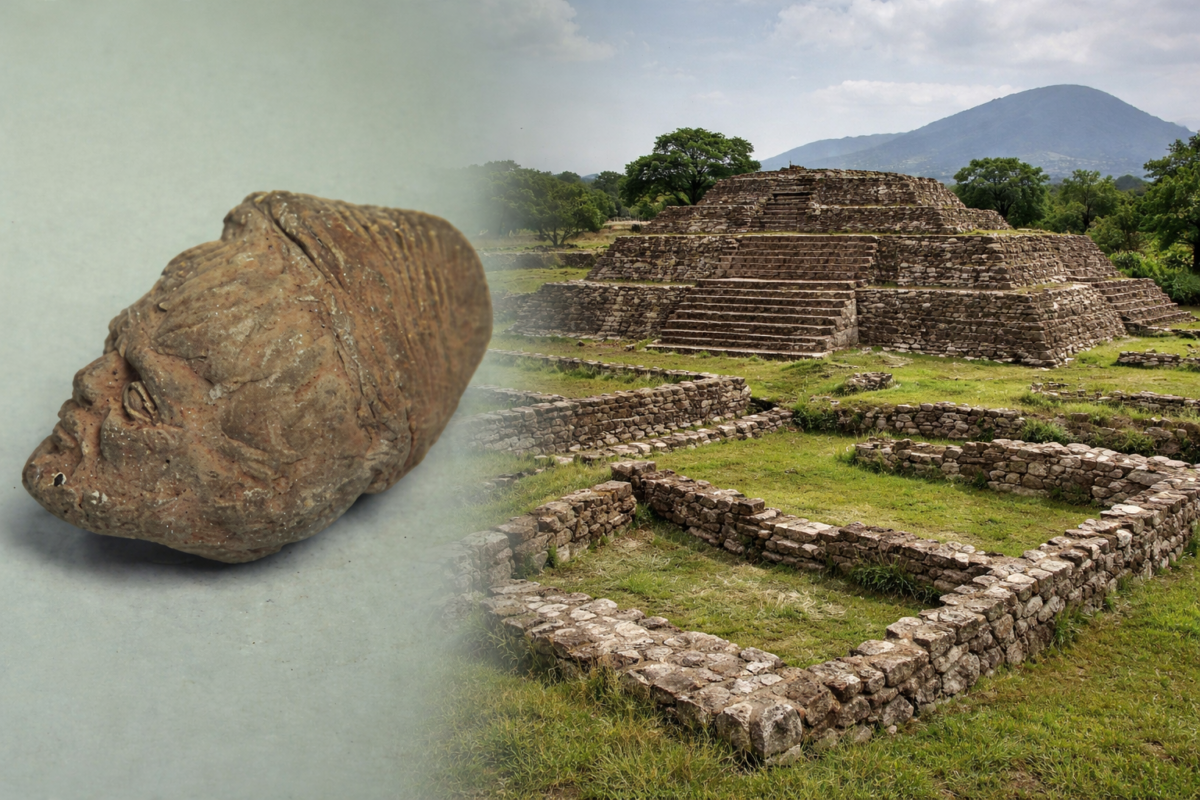
Rome ruled from Scotland to India, but largely ignored the Atlantic Ocean—the Romans called it Oceanus, the great outer sea. Medieval writers called it Mare Tenebrosum, the Sea of Darkness. Unpredictable winds, violent currents, no known destination. Their empire faced east. But in 1933, archaeologist José García Payón discovered something impossible: a small Roman terracotta head inside a sealed tomb near Toluca, Mexico. The tomb dated to before European contact. The floors above it were intact—nobody planted it after burial. Modern dating placed the artifact between 184 BC and 616 AD. The discovery was buried in academic journals and forgotten. In March 2026, the story resurfaced and went viral. How did a Roman artifact reach Mexico 1,300 years before Columbus? Romans did reach the Canary Islands (the "Fortunate Islands" mentioned by Pliny and Strabo). The North Atlantic Drift—the same current system that carries Gulf Stream water toward Europe—could carry a disabled Roman merchant vessel from the Canaries to the Caribbean in 40 to 60 days. No crew needed. Just wind and current. If even one Roman ship was blown off course in 800 years of maritime activity, the Tecaxic-Calixtlahuaca Head stops being impossible. It becomes inevitable. The artifact is housed at the Museo Nacional de Antropología in Mexico City.
A 2,000-Year-Old Roman Head in a Sealed Mexican Tomb Raises Questions History Can’t Answer
March 18, 2026
In the heart of central Mexico, beneath layers of earth untouched for centuries, archaeologists uncovered a discovery that still unsettles historians today. Known as the Tecaxic-Calixtlahuaca Head, this small terracotta artifact—found in a pre-Hispanic burial—has sparked one of the most intriguing debates in archaeology: Did ancient civilizations from Europe reach the Americas long before Columbus?
A Discovery That Defied Expectations
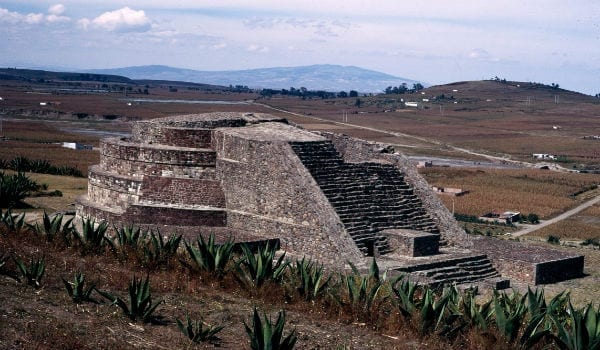
The story begins in 1933, when Mexican archaeologist José García Payón led excavations at the ancient site of Tecaxic-Calixtlahuaca, located roughly 65 kilometers from modern-day Mexico City.
Within a carefully sealed burial beneath three intact floor layers of a pyramidal structure, Payón’s team uncovered a rich funerary offering. The grave contained pottery fragments, gold ornaments, bone artifacts, and pieces of rock crystal—typical materials of pre-Columbian Mesoamerica.
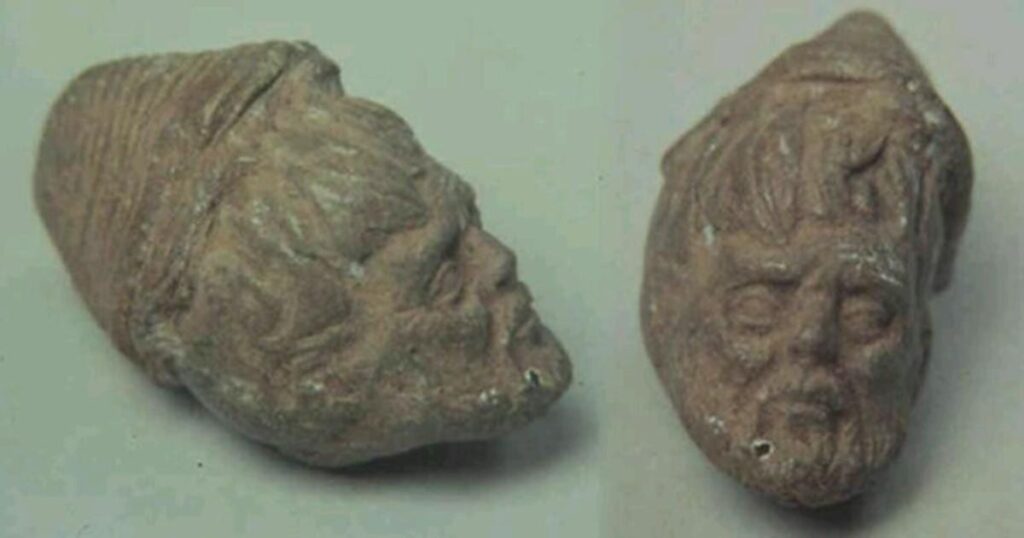
But among these objects was something entirely unexpected: a small terracotta head of a bearded man, with distinctly European features.
At first glance, the artifact appeared out of place. Its facial structure, beard style, and artistic execution did not resemble known indigenous Mesoamerican traditions. Instead, it looked strikingly familiar to something from the ancient Mediterranean world.
A Roman Face in the New World?
Decades later, the mystery deepened.
In 1961, Austrian anthropologist Robert Heine-Geldern examined the artifact and suggested it could date back as far as 200 BCE. Later, in the 1990s, German archaeologist Bernard Andreae—former director of the German Archaeological Institute in Rome—made a bold declaration.
According to Andreae, the head was “without any doubt Roman.”
His stylistic analysis pointed to the Severan period (193–235 CE), noting that the hairstyle and beard matched the fashion of Roman emperors from that era. If true, this would place the artifact’s origin in the Roman Empire—over a millennium before the burial in which it was found.
Scientific testing added another layer of intrigue. Thermoluminescence dating conducted in Germany suggested the object was indeed ancient, with a possible age range between the 9th century BCE and the 13th century CE. Crucially, this supported the idea that the artifact existed before Spanish contact with the Americas.
The artifact was discovered at the Tecaxic-Calixtlahuaca site alongside ceramic fragments, gold objects, bone, and rock crystal, sealed beneath three intact layers within a pyramidal structure.
A Timeline That Doesn’t Add Up
The burial itself was dated between 1476 and 1510 CE—just years before Hernán Cortés arrived in Mexico in 1519.
This creates a perplexing timeline. If the head is genuinely Roman and predates the burial, how did it end up in a sealed pre-Hispanic grave?
The find challenges the long-standing narrative tied to Christopher Columbus, whose 1492 voyage is traditionally seen as the first contact between Europe and the Americas. While Norse expeditions to North America are now widely accepted, evidence of Mediterranean civilizations reaching Mesoamerica remains controversial.
Theories Behind the Enigma
Over the decades, researchers have proposed several explanations—each as fascinating as it is contentious.
An Archaeological Hoax
One of the simplest explanations is also the most controversial: the artifact may have been planted.
Some researchers have suggested that a member of the excavation team placed the Roman head in the burial as a prank. According to later accounts, Payón was not always present during the dig and did not maintain exhaustive field notes—leaving room for doubt.
However, this theory relies heavily on hearsay. No direct evidence has ever confirmed deliberate tampering, and key witnesses are no longer alive to clarify the claim.
Early European Contact
Another possibility is that the head arrived in the Americas during the earliest phases of European exploration—perhaps even before the Spanish conquest of Mexico.
While the burial predates sustained contact, it overlaps with the earliest decades of transatlantic exploration. Could a stray European object have traveled inland and been incorporated into indigenous burial practices?
Some scholars consider this plausible, though unlikely.
A Drifting Shipwreck from the Old World
Perhaps the most intriguing hypothesis involves ancient transoceanic drift.
Researchers like Romeo Hristov have suggested that a Roman, Phoenician, or Berber ship could have been carried across the Atlantic by currents. If wreckage reached the shores of the Americas, objects like the terracotta head might have been collected and eventually traded inland.
Importantly, this scenario does not require sustained contact or exploration—only a single accidental crossing.
Still, critics argue that such an event, while theoretically possible, lacks supporting archaeological evidence.
Trans-Pacific or Asian Routes
A less discussed but equally intriguing idea proposes that the artifact may have reached the Americas via Asia. Ancient trade networks and migration routes across Eurasia could, in theory, have transported objects over vast distances before eventually crossing into the New World.
However, this theory remains speculative and difficult to prove.
A small terracotta head depicting a bearded man with distinctly European features, identified by experts as a Roman-style artifact dating to the 2nd–3rd century CE.
A Mystery Still Unresolved
What makes the Tecaxic-Calixtlahuaca head so compelling is not just its unusual appearance, but the context in which it was found: a sealed, undisturbed burial.
Despite decades of study, no single explanation has achieved consensus. Each theory raises new questions, highlighting the complexity of interpreting archaeological evidence.
As archaeologist David Grove has pointed out, even if the head did arrive via a shipwreck, it would not necessarily prove intentional contact between civilizations.
And yet, the artifact remains an outlier—an object that does not fit neatly into established historical narratives.
Rewriting History—or Expanding It?
The Tecaxic-Calixtlahuaca head serves as a reminder that history is not always as settled as it seems. While extraordinary claims require extraordinary evidence, anomalies like this challenge researchers to remain open to new possibilities.
Was it a hoax? A lost relic of early exploration? Or evidence of a forgotten chapter in human history?
For now, the answer remains elusive.
Buried beneath layers of time, the Roman head continues to watch silently—its origins uncertain, its journey unknown, and its mystery very much alive.
These days Kunzite is a popular pink gemstone, but it wasn't always a household name. In fact, for a long time, it was just an obscure, unnamed variety of the mineral spodumene.
That changed in 1902 thanks to a man named George F. Kunz. He was the legendary chief gemmologist for Tiffany & Co., and he was essentially the Indiana Jones of the gem world. When this vivid pink crystal was discovered in California, it was named in his honour, and Tiffany & Co. began heavily marketing it to the elite.
But even Tiffany knew the limitations of the stone. They didn't market it as a rugged, daily-wear engagement gem. They set it in massive, opulent, highly protected cocktail rings and pendants specifically designed to be worn to high-society evening events, safe from the sun and hard impacts. It is a stunning piece of jewellery history, but it was never meant to survive modern daily life.